October 6, 2012

Top Gambling Getaway Destinations

In collaboration with James Guill.

Casino de Monte Carlo

Gambling getaways have been growing in popularity with tourists over the last few years as many of the social stigmas around gambling have become relaxed. As such, tourists are always looking for the best spots to vacation and get their gamble on. Below are our picks for the best gambling getaway destinations.

Las Vegas


The top gambling destination in the United States is easily Las Vegas, NV. Known as Sin City, Vegas offer any type of gambling and almost any type of entertainment that tourists would want.

Not including establishments with just slots and video poker, Las Vegas has 77 casinos spread out through the city. Twenty-nine of those are located on the Vegas strip and include the Bellagio, Venetian, and Wynn.

With so many casinos, many offer low cost options for those looking for budget gambling getaways. With a little research you can find discounts on everything from hotels to entertainment.

Monte Carlo


If you've ever seen the classic James Bond movie Casino Royale, then you have seen
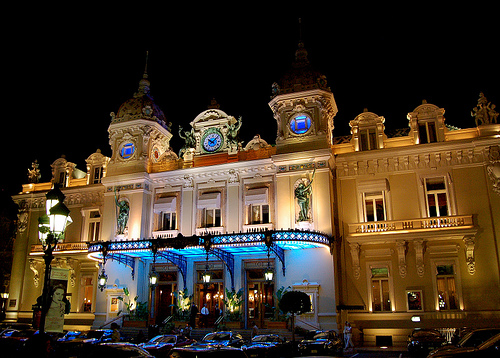
one of the most elegant casinos in the world. The Casino de Monte Carlo is located in
the heart of Monaco and is the oldest of all European casinos.

Built in 1863, the Monte Carlo is famous for its classic architecture as well as its
sophistication. A dress code is enforced here and at night patrons dress exactly as you would find them in Bond films.

This casino is a great place to experience the life of a high roller, but without having to have the bankroll of one.

Macau


Macau has quickly grown to become the top gambling destination in the world. In fact,
their revenues have grown at such a dramatic rate that they have surpassed Las Vegas as the top casino destination in the world.

At present there are 33 casinos in Macau with a large number of them running under a
government franchise. In recent years, large casino companies have been allowed to build in Macau, and one of those companies constructed the largest casinos property in the world.

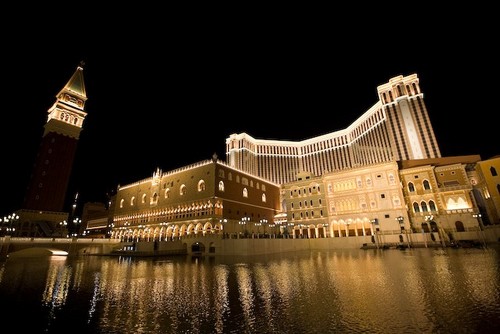
The Venetian Macau has a casino with over 500,000 square feet in gambling space
and the property takes up 10.5 Million square ft in total space. In addition to casino gambling, there are plenty of options for patrons that include hit shows, live music, and more.

The Venetian Macau
The Venetian Macau


October 3, 2012

Happy Nations - World Happiness Report

As if the United Nations didn't have more pressing matters to deal with, in April 2012 they commissioned the World Happiness Report, which reviews the state of happiness in the world today.

The report reflects a new worldwide demand for more attention to happiness and absence of misery as criteria for government policy.

These are the results of the first ever World Happiness Report 2012.

The World Happiness Report

  1. Denmark
  2. Finland
  3. Norway
  4. Netherlands
  5. Canada
  6. Switzerland
  7. Sweden
  8. New Zealand
  9. Australia
  10. Ireland
  11. USA
  12. Costa Rica
  13. Austria
  14. Israel
  15. Belgium
  16. Luxembourg
  17. United Arab Emirates
  18. United Kingdom
  19. Venezuela
  20. Iceland
View World Happiness Report
Download PDF of World Happiness Report

October 1, 2012

Kauai Has Many Gems – Here's 4

A guest post by Vincent Stokes.

Secret Kauai Bay
Secret Kauai Bay -  picture by Justin Donnelly

Just 20 minutes by air from Honolulu, the garden island, Kauai is over 550 mi.² of some of most beautiful terrain on earth. Kauai is known as the garden isle and is the oldest of the main Hawaiian Islands. Receiving over 450 inches of rain a year Kauai is one of the wettest spots on the planet. The millennia rains have carved out some of the most beautiful canyons, cliffs, and waterfalls in the world.

Kauai offers a truly relaxed atmosphere with small quaint towns and a plethora of tropical beaches and resorts. If adventure is in your heart then you won't have to go far to find world-class hikes, scuba diving, snorkeling, surfing or other Hawaiian style activities. Here are a few gems of the garden island to wet your appetite.

Waipouli Beach Resort

Words can't do justice to the beauty of Waipouli Beach Resort. This works well for the entire family or for a romantic getaway for that special someone. It's one of those places where you actually feel like YOU want to say thank you for letting you stay there. Everything you need is within walking distance. We strolled across the street coconut marketplace to get a taste of the local scene and found a free hula show right there in the center of the quad.

Waimea Canyon

Waimea Canyon is located on the Westside of the island. It is known as the Grand Canyon of the Pacific, and believe me, that is no exaggeration!  Make sure you follow the main road all the way into the mountains where it ends at Kokee State Park. This is the furthest end of the canyon and when you get there get ready to look down to the ocean over 4000 feet below you. If you are a newcomer then stop by the Kokee Natural History Museum and ask the staff to provide you with the best trail and scenic advice for the day.

Polihale State Beach Park

This beach-park is located miles away from the nearest town and only publicly accessed through poorly marked dirt roads. The road is bumpy, dusty, and turns into somewhat of a mini road trip but it is worth it once you arrive. There is open beach for miles and it is nearly empty most of the time. If you want to get away from life on the mainland and from the tourist traps you can fall in, then go to Polihale. I was there on a holiday weekend and still only saw about 10 people all day. Amazing!

Kipu Falls

Kipu Falls is a lovely little gem hidden off the main highway. Use extreme caution though, when entering the pool. It may look inviting and calm, however, there has been a few serious injuries and deaths over the past few years. This has prompted local authorities to remove Kipu Falls from tourist guidebooks. This makes the place a little bit more exotic and less crowded.  Only go here if you understand the risks and are confident in your swimming abilities. Enjoy the scenery and if you do
use the rope swing take the tips from the locals and never dive headfirst.

Kauai sunset
Kauai Sunset   - picture by Doug Brown


About the Author:  
Vincent Stokes is an avid traveler and freelance writer. He is also a Hawaii enthusiast.


September 27, 2012

First Cabin Tokyo Haneda - Review


An alternative option instead of staying at a hotel,  First Cabin is a capsule style private room located in Terminal 1 of Tokyo Haneda Airport, perfect for early morning flights, but also available for hire for a few hours, or day use, if you have a long wait for a connecting flight.


I opted for the First Class Cabin of 4.2 square metres, instead of the Business Class Cabin of 2.5 square metres. Divided into men and women areas, once inside I was pleasantly surprised to find a modern clean space with rows of cabins. My cabin Y08 had a double bed, small table and 32' flat screen TV. On the bed towels are folded, headphones for watching TV (so you don't disturb others), a dental kit, and branded pajamas to wear. Even a special adapter is supplied for charging your electronics as others are strictly prohibited due to fire regulations. There is also a safety box for storing valuables under your bed since cabins do not have a door and do not lock for safety reasons, instead pulling on the vertical shutters ensures your privacy.


Extra facilities include PC stations, battery charger for mobiles and laptops, lounge with a separate smoking room, vending machines that offer soft drinks, alcohol, snacks, bread and even noodles. A self-service laundry, bathhouse, showers, and a coin operated massage chair which I especially enjoyed in the spa area.

First Cabin is a well thought out experience and am very impressed by its function and facilities, a great value stay with all the amenities of a hotel, in a cabin style room conveniently located within the airport terminal.


Note: First Cabin is located in Terminal 1 of Tokyo Haneda Airport, not Terminal I (i) the international terminal. When I left  First Cabin  at 4:30am found myself locked-in the domestic terminal, thanks to a security guard I was escorted outside and luckily found the only passing vehicle, a taxi, and took the short ride to the international terminal in time to catch my very early morning flight.


Major religions in Japan - what to do when visiting shrines


The two main religions of Japan are Shinto, the native religion based around nature and multiple gods, and Buddhism, imported from India through Korea and China.

Shintoism

The native religion of Japan is Shinto, and the word 'Shinto' means 'way of the gods'. There are many kami (gods) and they often take the form of things close to life and nature such as trees, mountains, rivers, wind, rain, and fertility. People also become kami after they die and are worshipped as ancestral gods by their relatives.

In Shinto, people are believed to be essentially good. Therefore, the evil people do is caused by evil spirits. As a result, the purpose of most Shinto rituals is to keep away evil spirits by prayer, purification, and offerings to the kami.

Shinto is deeply rooted in the history of the Japanese. During the Meiji Period (1868-1912), Shinto was officially recognized as state religion but after World War II the state and the Shinto religion were officially separated.

Visiting a Shinto Shrine (jinja)

Shinto shrines are the homes of kami and therefore places 0f worship. Shrines are visited during special yearly events such as 'oshogatsu' (New Year's holiday) and festivals. People also visit shrines to pay respect to kami and pray for good fortune.

Throughout the year there are countless festivals held all over Japan to celebrate such events as the coming farming season, the harvest or important local historical events. Some festivals are small, local festivals while others are huge and attract people from all over Japan.

How should you behave when visiting a shrine?

Not much different than visiting a church or cathedral, visitors are expected to behave respectfully and to dress appropriately. Near the shrines entrance you will find a purification fountain. Pick up the ladle lying over the small well, fill it with the water provided, and rinse both hands. Then transfer some water into your cupped hand, rinse your mouth and spit the water beside the fountain. You are not supposed to drink the water directly from the ladle. Many people however only wash their hands or simple do not perform this purification ritual.

At the offering hall, throw a coin (any amount will do) into the offering box, bow deeply twice, clap your hands twice, bow deeply once more and pray for a few seconds. If there is some type of gong, use it before praying in order to 'wake up' the gods.

Visitors are usually allowed to take pictures at shrines, but watch for signs banning photography. Sacred objects representing the kami are stored in the inner chamber of the shrine where they cannot be seen except on very special occasions.

Buddhism

In the 6th Century, Buddhism made its way into Japan through Korea and China. Unlike Shintoism, Buddhism has a founder, Gautama Siddhartha, and the religion is based his teachings. At first, there were some conflicts between Buddhism and Shintoism, but eventually the followers of both religions learned to live together in relative harmony.

Throughout history Buddhism gained political influence; during the 8th Century, it was this influence that prompted the move of Japan's capital from Nara to Kyoto (to escape the overbearing Buddhist political influence in the former capital.)

The first branch of Buddhism introduced to Japan was Mahayana Buddhism but this was soon followed by other sects of Buddhism from China such as the Tendai sect (805 AD), the Shingon sect (806 AD) and the Zen sect (1195 AD). Other popular sects like Jodo (1175 AD), Jodo-Shinshu (1224 AD) and Nichiren (1253) developed in Japan as well.

Today in Japan about 90 million people consider themselves Buddhist but religion does not strongly affect people's everyday life, except on certain occasions like funerals.

Visiting a Buddhist Temple (otera)

As with Shinto shrines, Buddhist temples are places of worship and visitors should behave respectfully and dress appropriately. Every town in Japan has a temple. Some cities like Kyoto have thousands of temples.

Visitors can show their respect at the temple by throwing a coin (any amount will do) into the offering box in front of the main hall and then quietly saying a short prayer. When entering temple buildings, as a sign of respect you may be required to take off your shoes. Leave your shores on the shelves at the entrance or take them with your in plastic bags provided by some temples.

At some temples, visitors burn incense in large burners. The smoke from the incense burners is believed to have healing power or to make you more intelligent.

Temple shops display sacred Buddhist objects which you can purchase. Photography is usually permitted on the temple grounds. It is not allowed indoors at some temples.


Sources: Japanese Guest Houses

September 25, 2012

Hotel Century Southern Tower Tokyo - Review


The main feature of staying at Hotel Century Southern Tower is that all 375 guest rooms are located from the 22nd to 35th floor, and offers fabulous views of the skyline of Tokyo.

A double room was a good size, possibly the biggest room I had in all of Japan, with high standards, this was the most luxurious stay I had while visiting. The location itself is ideal as is only steps away from the southern exit of Shinjuku Station, a great base for exploring Tokyo  as well within walking distance to what is known as the entertainment district.

The most impressive feature is definitely the window and the view, with a wide aspect, the skyline by day was less impressive, but by night you almost don't want to leave your room as the view just becomes stunning watching the sunset over the city (if you have a west facing room).

However, you do pay more to stay at Hotel Century Southern Tower  but in return you get an outstanding service and view. With in room wifi (rare in Japan), large bed, decent room, great bathroom, and spotless interiors.

Hotel Century Southern Tower is a good option is your sharing or traveling as two. I used it as a treat to end my trip to Japan, and will always remember sitting in my room with the lights out, sipping my sake, looking out at the twinkling city lights below.


September 24, 2012

Staying in a Japanese Guest House or Ryokan


Staying in a ryokan, a Japanese inn, is one of the best ways to connect with Japan and the rich culture. Each ryokan is unique and is generally family owned and operated. This means that the service you receive will be different from inn to inn.

When you arrive at the ryokan you may be asked to take off your shoes at the entrance and put on slippers, which are sused for walking around inside the ryokan, your shoes will be placed in the entrance when you want to go outside. If you want to take a short walk near the ryokan, you can also wear the geta (wooden clogs), which are sometimes provided for guests.

A room in a ryokan is in Japanese style with tatami flooring (reed mats). Your room may contain some or all of the following, depending on the style and design, and expense of the ryokan.

  • agari-kamachi - after opening the door guests step into this small area and take off their slippers (do not wear your slippers on the tatami)
  • shoji - sliding Japanese doors that separate the agari-kamachi from the room
  • tatami - reed mat flooring
  • zataku - low wooden table
  • zabuton - sitting cushions
  • futon - sleeping quilt
  • tokonoma - ornamental alcove built into the wall, used for placing flower vases and hanging scrolls
  • oshiire - a closet for futon sleeping quilts
  • engawa - enclosed sitting area separated from the room by shoji

During your stay, a yukata or cotton robe may be provided for you to wear in your room, around the ryokan, and if you want, you can wear it together with your geta if you want to take a short walk. You put the yukata on just like a robe, but make sure you wrap it overnight, the other way is reserved for deceased.

Bathing is very important part of Japanese culture. Baths are for soaking in, not for cleaning yourself. You must wash your body and completely rinse off all soap before entering the bath. The same bath water is shared by all bathers and it is important to keep it clean. Before dinner is a good time to take a bath.  Be careful as these baths can be very hot. Japanese baths can be best thing to relax after a long day of sightseeing.

When seated at a low Japanese table on tatami mat flooring it is considered polite to sit seiza, which is when you sit with your legs tucked directly beneath you. If this is not possible or too uncomfortable it is fine to sit cross-legged. Most Japanese can only sit in seiza for 20 minutes or less. You may also ask for a special backrest which is a chair without legs.

Your dinner will be served either in your room or in the dining room. Generally the multi-course dinner will be served all at once and there will be more than enough to fill the largest for appetites.

Dinners were first offered at ryokans starting back in the Edo period 1603-1867, when warlords were required to travel every other year between their domain and Edo (modern Tokyo). The Shogun, who lived in Edo, set up 5 major roads to make travel easier. Along the roads stations were established where travelers could get food and rest at ryokans. In the beginning ryokan did not offer dinner so Young samuai would wander the streets doing what young men do. When ask why they were wandering the streets they would reply that they were just looking for something to eat. Sometimes problems occurred, so as a way to get everyone off the street the Shogun required that all ryokans serve dinner.  This solved the problem and started a tradition where ryokans served dinner. For many Japanese the dinner is the most important part of their stay at a ryokan

After a good night sleep you will have breakfast, generally served in the dining room and is perfectly acceptable to wear your yukata.

You will not be charged until you check out. Keep in mind, because most ryokans are small and family owned there may be curfews to consider.


A post by Joe Mendonca
See: Fuijto Ryokan - Tsumago Japan